
SHARE
Facebook X Pinterest WhatsApp

Whitebox Security Uses Crowdsourcing to Give IT Governance Control

Tensions Between IT and Business Leadership Force New Approach to Delivering Technology When it comes to governance and compliance, the biggest issue facing IT organizations is often simply trying to figure out who owns the data that is being accessed. To solve that problem, Whitebox Security, within its WhiteOPS governance software, makes available crowdsourcing techniques […]

Written By
MV
Mike Vizard
Sep 2, 2014
Slide Show

Tensions Between IT and Business Leadership Force New Approach to Delivering Technology

When it comes to governance and compliance, the biggest issue facing IT organizations is often simply trying to figure out who owns the data that is being accessed. To solve that problem, Whitebox Security, within its WhiteOPS governance software, makes available crowdsourcing techniques to allow IT organizations to query end users to determine who owns the data they are accessing.

Whitebox Security CEO Maor Goldberg says that before any kind of effective governance and compliance policy can be put in place, the internal IT organization needs to know who should actually have permissions to access that data. Unfortunately, that’s not as easy as it might seem. Employees change jobs inside organizations, and even when they leave the company, many of them still retain passwords to sensitive documents and applications.

In addition to providing the tools IT organizations need to manage compliance, Goldberg says Whitebox Security gives IT organizations the tools they need to establish a baseline from which to assess who in the organization should have access to which data. To that end, Whitebox Security has updated its WhiteOPS to add a portal and simplified entitlements and identities forensics. In addition, the new release includes best practices for governance that IT organizations can immediately leverage.
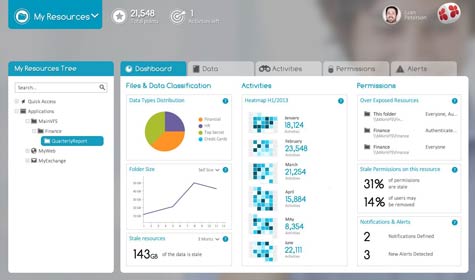
Whitebox Security

When it comes to governance, Goldberg says it’s pretty clear that far too many users are running around with privileged access to data that they either shouldn’t have or no longer need. Each one of those users represents a potential insider threat that is likely to throw up a red flag any time a compliance audit is conducted.

Naturally, the IT organization will bear most of the blame for that compliance violation, unless, of course, they can proactively find a way to avoid ever allowing that violation to occur in the first place.

MV

Michael Vizard is a seasoned IT journalist, with nearly 30 years of experience writing and editing about enterprise IT issues. He is a contributor to publications including Programmableweb, IT Business Edge, CIOinsight and UBM Tech. He formerly was editorial director for Ziff-Davis Enterprise, where he launched the company’s custom content division, and has also served as editor in chief for CRN and InfoWorld. He also has held editorial positions at PC Week, Computerworld and Digital Review.

Recommended for you...

Observability: Why It’s a Red Hot Tech Term
Tom Taulli
Jul 19, 2022
Top GRC Platforms & Tools in 2022
Jira vs. ServiceNow: Features, Pricing, and Comparison
Surajdeep Singh
Jun 17, 2022
IT Business Edge Logo

The go-to resource for IT professionals from all corners of the tech world looking for cutting edge technology solutions that solve their unique business challenges. We aim to help these professionals grow their knowledge base and authority in their field with the top news and trends in the technology space.

Property of TechnologyAdvice. © 2025 TechnologyAdvice. All Rights Reserved

Advertiser Disclosure: Some of the products that appear on this site are from companies from which TechnologyAdvice receives compensation. This compensation may impact how and where products appear on this site including, for example, the order in which they appear. TechnologyAdvice does not include all companies or all types of products available in the marketplace.