

Five Innovations in the Data Storage Landscape

Expanding its campaign to eliminate the need for solid-state disks (SSDs) in primary storage environments, Violin Memory today unveiled extensions to its all-Flash storage platform.
Sudhir Prasad, senior director of product management for Violin Memory, says the latest additions to the company’s Flash Storage Platform (FSP) 7000 series push the entry-level cost of the arrays below the $100,000 mark, while at the same time making available a version of the array that can be configured with up to 1.4 petabytes of raw capacity.
Instead of applying the mechanics of disk architectures to primary storage, Prasad says Violin Memory took advantage of its controller technology to create arrays that enable applications to transparently make use of Flash memory directly. The end result is an all-Flash array that provides access to shared storage at rates of up to 2.2 million IOPs.
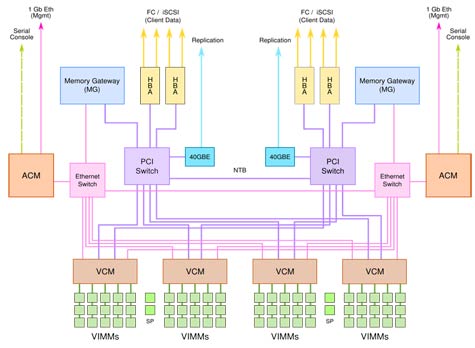
Initially launched earlier this year, Prasad says the FSP System Hardware Architecture eliminates the need to rely on a legacy disk construct to take advantage of Flash memory for primary storage. In its place are Flash storage modules that are managed via a Concerto operating system developed by Violin Memory that manages everything from garbage collections across the Flash storage environment to providing enterprise-class snapshots for data protection.
In general, Prasad says one of the factors that has limited the adoption of Flash memory is that it’s only just now that price points for Flash storage are roughly equal to traditional magnetic disks in high-performance computing environments. Prasad also notes that Flash storage capacity is now reaching a point where it can be used in most application scenarios. The result, notes Prasad, is less time spent optimizing throughput using magnetic storage devices inside a data center that is much smaller in the absence of traditional storage arrays based on magnetic disks.
It may take a while longer for most IT organizations to cycle through existing magnetic storage investments. But as IT budgets begin to open up in the coming year, chances are high that the amount of disk technology of any kind inside the data center is going to be a whole lot less.