
SHARE
Facebook X Pinterest WhatsApp

TIBCO Software Takes IoT Integration to the Edge

5 Questions CIOs and CFOs Need to Ask to Prepare for IoT Unlike traditional enterprise IT environments where the data center is at the core of almost every function, IT deployments involving the Internet of Things (IoT) are going to push processing out to edge of the network as much as possible in order to […]

Written By
MV
Mike Vizard
Oct 5, 2016
Slide Show

5 Questions CIOs and CFOs Need to Ask to Prepare for IoT

Unlike traditional enterprise IT environments where the data center is at the core of almost every function, IT deployments involving the Internet of Things (IoT) are going to push processing out to edge of the network as much as possible in order to reduce the amount of data that has to transverse the network.

To facilitate more processing at the edge of the IoT network, TIBCO Software this week released Project Flogo, an open source integration engine that is order of magnitudes smaller than any run time engine written in Java or Node.js.

TIBCO Software CTO Matt Quinn says Project Flogo, written in the Go programming language, is an effort to help jumpstart IoT deployments by making it easier to integrate data flows at the IoT gateway rather than having to send constant streams of data back to a data center.

“We’ve built a super lightweight broker for the edge,” says Quinn.
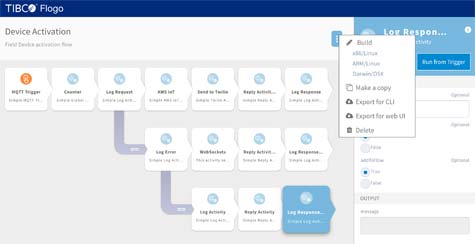
Flogo Device Activation

Project Flogo won’t replace every class of integration broker. Instead, Quinn says, IT organizations will see more integration diversity as different types of integration brokers get optimized for different classes of workloads. TIBCO Software will then provide the management and orchestration framework to integrate those integration engines across the enterprise.

TIBCO Software, adds Quinn, opted to make Project Flogo available as open source code to make it easier on developers to create IoT applications that, in turn, will fuel the “diaspora” of integration out to the edge of the network.

Obviously, most organizations are just now starting to really understand what goes into deploying and supporting IoT applications. But the one thing that is becoming clear is that many of the traditional assumptions concerning how traditional enterprise application workloads are deployed in the data center will not apply.

Save

Save

Save

MV

Michael Vizard is a seasoned IT journalist, with nearly 30 years of experience writing and editing about enterprise IT issues. He is a contributor to publications including Programmableweb, IT Business Edge, CIOinsight and UBM Tech. He formerly was editorial director for Ziff-Davis Enterprise, where he launched the company’s custom content division, and has also served as editor in chief for CRN and InfoWorld. He also has held editorial positions at PC Week, Computerworld and Digital Review.

Recommended for you...

5G and Industrial Automation: Practical Use Cases
Kashyap Vyas
Apr 22, 2022
Understanding the Relationship Between 5G and Edge Computing
Collins Ayuya
Apr 19, 2022
Building a Private 5G Network for Your Business 
Kihara Kimachia
Apr 18, 2022
IT Business Edge Logo

The go-to resource for IT professionals from all corners of the tech world looking for cutting edge technology solutions that solve their unique business challenges. We aim to help these professionals grow their knowledge base and authority in their field with the top news and trends in the technology space.

Property of TechnologyAdvice. © 2025 TechnologyAdvice. All Rights Reserved

Advertiser Disclosure: Some of the products that appear on this site are from companies from which TechnologyAdvice receives compensation. This compensation may impact how and where products appear on this site including, for example, the order in which they appear. TechnologyAdvice does not include all companies or all types of products available in the marketplace.