
SHARE
Facebook X Pinterest WhatsApp

Splunk App for AWS Is Updated with New Tools

Multi-Cloud 101: 7 Things You Need to Know At the AWS re:Invent 2016 conference today, Splunk extended its alliance with Amazon Web Services (AWS) by delivering an update to the Splunk App for AWS in addition to making that free tool available for the first time on a Splunk Light instance that is specifically designed […]

Written By
MV
Mike Vizard
Nov 30, 2016
Slide Show

Multi-Cloud 101: 7 Things You Need to Know

At the AWS re:Invent 2016 conference today, Splunk extended its alliance with Amazon Web Services (AWS) by delivering an update to the Splunk App for AWS in addition to making that free tool available for the first time on a Splunk Light instance that is specifically designed to meet the needs of small IT teams and individual developers.

Praveen Rangnath, senior director of marketing for cloud solutions at Splunk, says that as more application workloads migrate to AWS, the need for visibility into the most widely used public cloud computing environment continues to escalate.

“We’re now seeing entire data centers being forklifted into AWS,” says Rangnath.
Splunk1

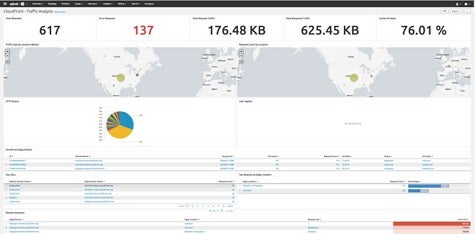
The latest version of Splunk App for AWS provides access to enhanced dashboards, billing insights into multiple types of AWS instances, and integrated machine learning algorithms that identify cost optimization opportunities as well as potential security issues.

Meanwhile, support for Splunk Light makes that application available to smaller organizations at a price point starting at $3.00 a day. Rangnath notes that large swaths of the AWS public cloud are made up of small companies that need a simple mechanism to help them optimize their AWS environment and control costs.

For all the hype surrounding Big Data and Hadoop, it turns out that the most commonly deployed use case for Big Data in a production environment is often Splunk. By employing Splunk to analyze massive amounts of machine data, an IT organization can more easily exercise control over IT operations both inside its own data center as well as on public clouds such as AWS. Now that those public clouds are becoming a more standard element of the enterprise, it’s also clear that IT organizations are expected to be able to manage those external clouds just as easily as if they were their own local data center.

Save

Save

MV

Michael Vizard is a seasoned IT journalist, with nearly 30 years of experience writing and editing about enterprise IT issues. He is a contributor to publications including Programmableweb, IT Business Edge, CIOinsight and UBM Tech. He formerly was editorial director for Ziff-Davis Enterprise, where he launched the company’s custom content division, and has also served as editor in chief for CRN and InfoWorld. He also has held editorial positions at PC Week, Computerworld and Digital Review.

Recommended for you...

Strategies for Successful Data Migration
Kashyap Vyas
May 25, 2022
Leveraging AI to Secure CloudOps as Threat Surfaces Grow
ITBE Staff
May 20, 2022
The Emergence of Confidential Computing
Tom Taulli
Apr 20, 2022
IT Business Edge Logo

The go-to resource for IT professionals from all corners of the tech world looking for cutting edge technology solutions that solve their unique business challenges. We aim to help these professionals grow their knowledge base and authority in their field with the top news and trends in the technology space.

Property of TechnologyAdvice. © 2025 TechnologyAdvice. All Rights Reserved

Advertiser Disclosure: Some of the products that appear on this site are from companies from which TechnologyAdvice receives compensation. This compensation may impact how and where products appear on this site including, for example, the order in which they appear. TechnologyAdvice does not include all companies or all types of products available in the marketplace.