SHARE
Facebook X Pinterest WhatsApp

Oracle Extends App Reach to Devices Running HTML5

While mobile computing tends to generate a lot of interest in new approaches to managing desktops in general and devices in particular, a lot of IT organizations tend to favor the path of least resistance. For a lot of them, that means finding a way to securely make a handful of applications available to users […]

Written By
MV
Mike Vizard
May 1, 2013

While mobile computing tends to generate a lot of interest in new approaches to managing desktops in general and devices in particular, a lot of IT organizations tend to favor the path of least resistance.

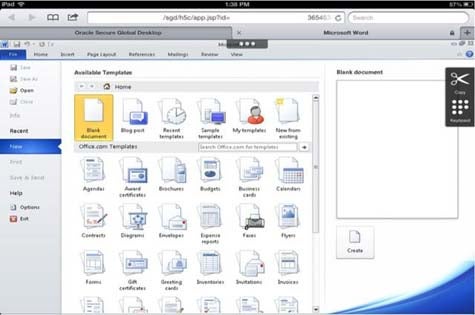
For a lot of them, that means finding a way to securely make a handful of applications available to users that need to access them remotely. With that specific use case in mind, Oracle this week released version 5.0 of the Oracle Secure Desktop which, for the first time, adds support for HTML5.

According to Chris Kawalek, senior principal product marketing director, the basic idea is to extend the functionality of an application running on a server by allowing a user running an HTML5-enabled browser on their device to access it. In many ways, that simply extends a paradigm for remote access that has existed for 20 years. At the same time, however, the browser environment as a whole continues to get richer, making it more feasible to run elements of an enterprise application directly in the browser.
viz20130501-01

Based on the Tarantella terminal server technology that Oracle gained when it acquired Sun Microsystems, the core technology used on Oracle Secure Desktop is well over 10 years old.

Kawalek says that as the application environment in the browser continues to mature, there will actually be a resurgence of interest in remotely accessing applications from within the browser, which for many organizations eliminates the need to invest in alternative desktop computing architectures such as virtual desktop infrastructure (VDI).

Of course, there are those organizations that want to replicate the entire desktop experience on a mobile computing device. In those cases, something such as VDI is required. But if all you are trying to do is give people in the organization using mobile computing devices access to a specific set of applications, there’s no need to do much more than extend the remote access technology already in place.

MV

Michael Vizard is a seasoned IT journalist, with nearly 30 years of experience writing and editing about enterprise IT issues. He is a contributor to publications including Programmableweb, IT Business Edge, CIOinsight and UBM Tech. He formerly was editorial director for Ziff-Davis Enterprise, where he launched the company’s custom content division, and has also served as editor in chief for CRN and InfoWorld. He also has held editorial positions at PC Week, Computerworld and Digital Review.

Recommended for you...

Observability: Why It’s a Red Hot Tech Term
Tom Taulli
Jul 19, 2022
Top GRC Platforms & Tools in 2022
Jira vs. ServiceNow: Features, Pricing, and Comparison
Surajdeep Singh
Jun 17, 2022
IT Business Edge Logo

The go-to resource for IT professionals from all corners of the tech world looking for cutting edge technology solutions that solve their unique business challenges. We aim to help these professionals grow their knowledge base and authority in their field with the top news and trends in the technology space.

Property of TechnologyAdvice. © 2025 TechnologyAdvice. All Rights Reserved

Advertiser Disclosure: Some of the products that appear on this site are from companies from which TechnologyAdvice receives compensation. This compensation may impact how and where products appear on this site including, for example, the order in which they appear. TechnologyAdvice does not include all companies or all types of products available in the marketplace.