SHARE
Facebook X Pinterest WhatsApp

Cazena Unfurls Data Science Sandbox in the Cloud

Because of what’s becoming a chronic shortage in Big Data expertise, more organizations are starting to rely on service providers to not only host their data, but manage it. This week at a Spark Summit East conference, Cazena took that concept a step further by taking the wraps off a Data Science Sandbox as a […]

Written By
MV
Mike Vizard
Feb 9, 2017

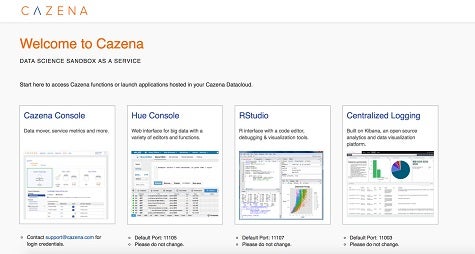
Because of what’s becoming a chronic shortage in Big Data expertise, more organizations are starting to rely on service providers to not only host their data, but manage it. This week at a Spark Summit East conference, Cazena took that concept a step further by taking the wraps off a Data Science Sandbox as a Service that makes it possible for data science professionals to create their own sandboxes without any direct intervention required from an IT department.

Cazena CEO Prat Moghe says Cazena often works with internal IT organizations to ingest data into its cloud service. But once it’s there, many organizations want data scientists to be able to flexibly self-service their own data needs, says Moghe. That approach gives data scientists more control over the overall environment without requiring them to wait for someone from an internal IT department to service their requests.

“There’s often an impedance mismatch between data scientists and IT,” says Moghe.

Moghe says the new service, based on an implementation of the open source Apache Spark 2.0 in-memory computing framework, allows data scientists to employ R, Python or SQL programming languages to manipulate data.
CazenaData

Many Big Data projects get started on-premises to prove the concept. But once an organization decides that the return on investment in a Big Data project merits further investment, they are quickly presented with a variety of challenges associated with managing a Big Data deployment in a production environment.

Obviously, it’s still early days for most organizations when it comes to Big Data projects. But arguably, the most important question to address is the precise division of labor they want to see between data scientists and internal IT departments. Many of those organizations may decide that limited internal IT resources might best be employed elsewhere.

MV

Michael Vizard is a seasoned IT journalist, with nearly 30 years of experience writing and editing about enterprise IT issues. He is a contributor to publications including Programmableweb, IT Business Edge, CIOinsight and UBM Tech. He formerly was editorial director for Ziff-Davis Enterprise, where he launched the company’s custom content division, and has also served as editor in chief for CRN and InfoWorld. He also has held editorial positions at PC Week, Computerworld and Digital Review.

Recommended for you...

Data Lake Strategy Options: From Self-Service to Full-Service
Chad Kime
Aug 8, 2022
What’s New With Google Vertex AI?
Kashyap Vyas
Jul 26, 2022
Data Lake vs. Data Warehouse: What’s the Difference?
Aminu Abdullahi
Jul 25, 2022
IT Business Edge Logo

The go-to resource for IT professionals from all corners of the tech world looking for cutting edge technology solutions that solve their unique business challenges. We aim to help these professionals grow their knowledge base and authority in their field with the top news and trends in the technology space.

Property of TechnologyAdvice. © 2025 TechnologyAdvice. All Rights Reserved

Advertiser Disclosure: Some of the products that appear on this site are from companies from which TechnologyAdvice receives compensation. This compensation may impact how and where products appear on this site including, for example, the order in which they appear. TechnologyAdvice does not include all companies or all types of products available in the marketplace.