
SHARE
Facebook X Pinterest WhatsApp

Boundary Monitoring Tool Upgrade Gives Faster Alerts, Actionable Data

Top 10 Storage and Networking Trends for 2014 When it comes to the IT environment, complexity rules the day. A number of interdependencies between applications running on servers are now being pushed to their maximum utilization rates. The challenge that this creates is that the crash of a single server can have a cascading effect […]

Written By
MV
Mike Vizard
May 8, 2014
Slide Show

Top 10 Storage and Networking Trends for 2014

When it comes to the IT environment, complexity rules the day. A number of interdependencies between applications running on servers are now being pushed to their maximum utilization rates. The challenge that this creates is that the crash of a single server can have a cascading effect across applications.

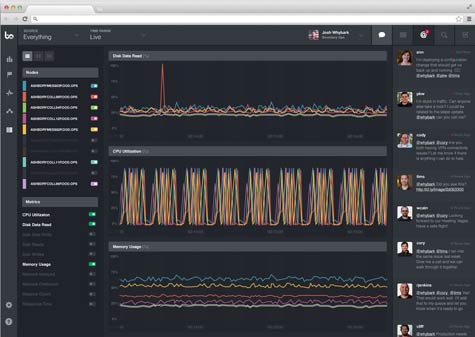
To help IT organizations cope, Boundary created an IT monitoring tool designed for running servers at scale. Boundary today is upgrading that namesake tool by providing support for 80 additional server metrics, multi-channel notification capabilities, and integrated collaboration capabilities as well as extended support for additional event sources such as SNMP, Syslog and email.

Boundary CEO Gary Read says that primary differences between Boundary and other tools is both the depth of reporting and the fact that it samples the IT environment every second to provide IT organizations with alerts to any changes.
viz20140508-01

At the speed that servers now routinely operate, Read says IT organization have only about a minute to head off most catastrophic events. Boundary is designed to provide alert information in a way that gives IT the actionable intelligence to identify not only what IT infrastructure elements are suddenly unavailable, but also what applications are being affected. Boundary also now provides an anomaly detection capability that allows customers to be alerted to outliers for any metric by using minimum, maximum, average, or sum ranges across one second to 12-hour intervals.

Enterprise computing has never been more distributed and, as a result, more complicated. The difference between a momentary interruption in service and a truly catastrophic event is often only a couple of minutes. Most end users will never notice a momentary interruption in service. But a catastrophic event tends to bring a lot of attention to the IT department that most organizations would just as soon do without.

MV

Michael Vizard is a seasoned IT journalist, with nearly 30 years of experience writing and editing about enterprise IT issues. He is a contributor to publications including Programmableweb, IT Business Edge, CIOinsight and UBM Tech. He formerly was editorial director for Ziff-Davis Enterprise, where he launched the company’s custom content division, and has also served as editor in chief for CRN and InfoWorld. He also has held editorial positions at PC Week, Computerworld and Digital Review.

Recommended for you...

Observability: Why It’s a Red Hot Tech Term
Tom Taulli
Jul 19, 2022
Top GRC Platforms & Tools in 2022
Jira vs. ServiceNow: Features, Pricing, and Comparison
Surajdeep Singh
Jun 17, 2022
IT Business Edge Logo

The go-to resource for IT professionals from all corners of the tech world looking for cutting edge technology solutions that solve their unique business challenges. We aim to help these professionals grow their knowledge base and authority in their field with the top news and trends in the technology space.

Property of TechnologyAdvice. © 2026 TechnologyAdvice. All Rights Reserved

Advertiser Disclosure: Some of the products that appear on this site are from companies from which TechnologyAdvice receives compensation. This compensation may impact how and where products appear on this site including, for example, the order in which they appear. TechnologyAdvice does not include all companies or all types of products available in the marketplace.