SHARE
Facebook X Pinterest WhatsApp

Sinequa Partners with Google and IBM on AI

In a few short years, the IT industry has moved from a paucity of artificial intelligence (AI) technologies to an embarrassment of riches. The challenge IT organizations now face is finding a way to incorporate them all. To address that issue, Sinequa announced today it has integrated AI technologies from both Google and IBM into […]

Written By
MV
Mike Vizard
Jun 27, 2017

In a few short years, the IT industry has moved from a paucity of artificial intelligence (AI) technologies to an embarrassment of riches. The challenge IT organizations now face is finding a way to incorporate them all.

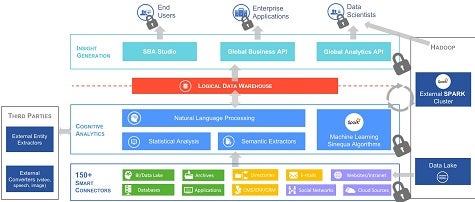
To address that issue, Sinequa announced today it has integrated AI technologies from both Google and IBM into a Sinequa Logical Data Warehouse platform. In the case of Google, that means adding support for Google Vision and Translate AI software, as well as the Watson Alchemy application programming interfaces (APIs) for Image Recognition and Speech-to-Text services for translating languages.

Scott Parker, senior product marketing manager for Sinequa, says rather than implementing advanced AI technologies themselves, most organizations are going to access them via platforms such as Sinequa designed from the ground up to centralize access to multiple data sources. The Sinequa approach gives IT organizations the option of deploying that data warehouse on-premises or in a public cloud, says Parker.

“It can run wherever your data is,” says Parker.
Sinequa1

Figuring out exactly where to put a data warehouse has become a more complicated decision in the age of the cloud. IT organizations have a vested interest in moving as little data as possible. If data is created in the cloud, it makes sense to apply the analytics there. If most of the data is created on-premises, it makes sense to deploy the data warehouse there. That data gravity effect not only influences the location of the data warehouse, but also where AI algorithms need to be applied.

Less clear, however, is the degree to which IT organizations will need to master all those algorithms themselves versus simply invoking them as a feature within a cognitive analytics application.

MV

Michael Vizard is a seasoned IT journalist, with nearly 30 years of experience writing and editing about enterprise IT issues. He is a contributor to publications including Programmableweb, IT Business Edge, CIOinsight and UBM Tech. He formerly was editorial director for Ziff-Davis Enterprise, where he launched the company’s custom content division, and has also served as editor in chief for CRN and InfoWorld. He also has held editorial positions at PC Week, Computerworld and Digital Review.

Recommended for you...

Top RPA Tools 2022: Robotic Process Automation Software
Jenn Fulmer
Aug 24, 2022
Metaverse’s Biggest Potential Is In Enterprises
Tom Taulli
Aug 18, 2022
The Value of the Metaverse for Small Businesses
IT Business Edge Logo

The go-to resource for IT professionals from all corners of the tech world looking for cutting edge technology solutions that solve their unique business challenges. We aim to help these professionals grow their knowledge base and authority in their field with the top news and trends in the technology space.

Property of TechnologyAdvice. © 2025 TechnologyAdvice. All Rights Reserved

Advertiser Disclosure: Some of the products that appear on this site are from companies from which TechnologyAdvice receives compensation. This compensation may impact how and where products appear on this site including, for example, the order in which they appear. TechnologyAdvice does not include all companies or all types of products available in the marketplace.