SHARE
Facebook X Pinterest WhatsApp

Progress Charts Path to Simpler Cognitive Computing Future

Making its first foray into the emerging realm of cognitive computing, Progress has acquired DataRPM to gain access to a predictive analytics engine that is primarily used to maintain physical equipment connected to the internet. Mark Troester, vice president of strategy at Progress, says the company plans to leverage DataRPM to increase its own presence […]

Written By
MV
Mike Vizard
Apr 6, 2017

Making its first foray into the emerging realm of cognitive computing, Progress has acquired DataRPM to gain access to a predictive analytics engine that is primarily used to maintain physical equipment connected to the internet.

Mark Troester, vice president of strategy at Progress, says the company plans to leverage DataRPM to increase its own presence as a provider of an application development platform for Internet of Things (IoT) applications, while at the same time moving to make the core Meta Learning engine developed by DataRPM to drive its predictive analytics application more broadly accessible to application developers that make use of various Progress platforms for developing applications.

The end goal, says Troester, is to make various forms of advanced cognitive computing capabilities more accessible to developers. Vendors such as IBM are racing to embed various forms of cognitive computing capabilities into applications and services. Progress, says Troester, plans to level the playing field for all developers.

“This is just the beginning,” says Troester. “We want to make building these types of applications much simpler.”
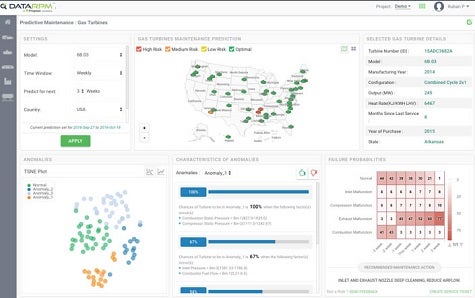
DataRPM

At this juncture, it’s become obvious that just about every enterprise application is about to be infused with some form of cognitive computing enabled by machine and deep learning algorithms. The issue many developers will have to wrestle with is to what degree they want to harness those algorithms themselves versus having them exposed in an application development platform. History would suggest that the path of least resistance for most developers is going to be using a platform that abstracts away as much of the lower-level cognitive computing complexity as possible.


MV

Michael Vizard is a seasoned IT journalist, with nearly 30 years of experience writing and editing about enterprise IT issues. He is a contributor to publications including Programmableweb, IT Business Edge, CIOinsight and UBM Tech. He formerly was editorial director for Ziff-Davis Enterprise, where he launched the company’s custom content division, and has also served as editor in chief for CRN and InfoWorld. He also has held editorial positions at PC Week, Computerworld and Digital Review.

Recommended for you...

Top RPA Tools 2022: Robotic Process Automation Software
Jenn Fulmer
Aug 24, 2022
Metaverse’s Biggest Potential Is In Enterprises
Tom Taulli
Aug 18, 2022
The Value of the Metaverse for Small Businesses
IT Business Edge Logo

The go-to resource for IT professionals from all corners of the tech world looking for cutting edge technology solutions that solve their unique business challenges. We aim to help these professionals grow their knowledge base and authority in their field with the top news and trends in the technology space.

Property of TechnologyAdvice. © 2025 TechnologyAdvice. All Rights Reserved

Advertiser Disclosure: Some of the products that appear on this site are from companies from which TechnologyAdvice receives compensation. This compensation may impact how and where products appear on this site including, for example, the order in which they appear. TechnologyAdvice does not include all companies or all types of products available in the marketplace.