SHARE
Facebook X Pinterest WhatsApp

Marconi Employs Blockchain Technologies to Create Network Overlay

An effort to apply blockchain technologies to create a network overlay that makes it possible to programmatically control how individual packets travel across an Ethernet-based network was advanced today with the launch of a Developer Test Network from Marconi. Peter Lai, operations lead for Marconi, says the Developer Test Network provides developers with a sandbox […]

Written By
MV
Mike Vizard
Jan 31, 2019

An effort to apply blockchain technologies to create a network overlay that makes it possible to programmatically control how individual packets travel across an Ethernet-based network was advanced today with the launch of a Developer Test Network from Marconi.

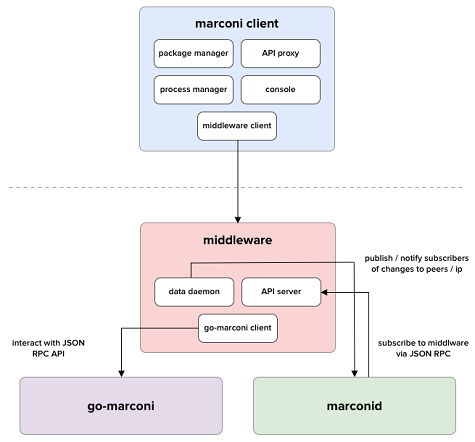
Peter Lai, operations lead for Marconi, says the Developer Test Network provides developers with a sandbox where they can develop applications on top of a network overlay based on the Marconi Protocol. The protocol was born out of frustration when it proved too challenging to manage network traffic in web-scale environments when Jong Kim, chief architect for Marconi, worked for Google, says Lai.

The overlay developed by Marconi is designed to be deployed on top of traditional X86 servers versus Ethernet switches based on proprietary ASICs in much the same manner network virtualization overlays such as VMware NSX are deployed, says Lai.

The blockchain technologies incorporated in the Marconi network overlay, however, provide an additional layer of security that also serves to provide a more robust form of encryption on top of either SSL or TLS connections.

Use cases for the Marconi Protocol potentially span everything from connecting multiple clouds across one logical network overlay to network microsegmentation and load balancing within a data center.
MarconiDev

Less clear going forward is to what degree developers will want to take control over networking in the age of the cloud. As networks become more programmable, it’s becoming increasingly feasible for developers to programmatically manage both applications and the underlying IT infrastructure they depend on. Of course, just because something can be done doesn’t always mean it should or will be. But in the age of DevOps, developers are already making it clear they expect to be able to invoke any number of application programming interfaces (APIs) to service their own needs.


MV

Michael Vizard is a seasoned IT journalist, with nearly 30 years of experience writing and editing about enterprise IT issues. He is a contributor to publications including Programmableweb, IT Business Edge, CIOinsight and UBM Tech. He formerly was editorial director for Ziff-Davis Enterprise, where he launched the company’s custom content division, and has also served as editor in chief for CRN and InfoWorld. He also has held editorial positions at PC Week, Computerworld and Digital Review.

Recommended for you...

Top RPA Tools 2022: Robotic Process Automation Software
Jenn Fulmer
Aug 24, 2022
Metaverse’s Biggest Potential Is In Enterprises
Tom Taulli
Aug 18, 2022
The Value of the Metaverse for Small Businesses
IT Business Edge Logo

The go-to resource for IT professionals from all corners of the tech world looking for cutting edge technology solutions that solve their unique business challenges. We aim to help these professionals grow their knowledge base and authority in their field with the top news and trends in the technology space.

Property of TechnologyAdvice. © 2025 TechnologyAdvice. All Rights Reserved

Advertiser Disclosure: Some of the products that appear on this site are from companies from which TechnologyAdvice receives compensation. This compensation may impact how and where products appear on this site including, for example, the order in which they appear. TechnologyAdvice does not include all companies or all types of products available in the marketplace.