
SHARE
Facebook X Pinterest WhatsApp

Varnish Software Provides Visibility into Microservices Architectures

Building Software-Defined Control for Your Data Center One of the bigger challenges IT organizations face as they begin to embrace microservices architectures to build and deploy applications is simply keeping track of what is happening when. Without any insight into what is happening across all the endpoints that are invoking any number of IT resources, […]

Written By
MV
Mike Vizard
Dec 2, 2015
Slide Show

Building Software-Defined Control for Your Data Center

One of the bigger challenges IT organizations face as they begin to embrace microservices architectures to build and deploy applications is simply keeping track of what is happening when. Without any insight into what is happening across all the endpoints that are invoking any number of IT resources, it becomes difficult to determine what specifically needs to be fixed or optimized.

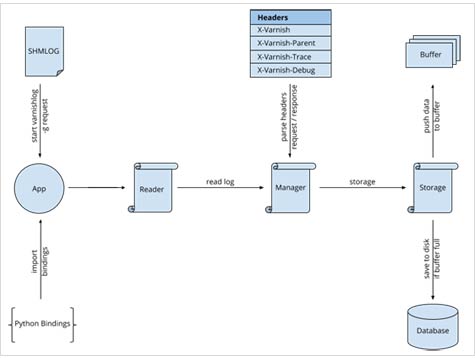
To address that issue, Varnish Software this week announced it is implementing open source Zipkin tracking software originally developed by Twitter on top of its engine for caching API traffic in the form of a product called Zipnick. Varnish Software CTO Per Buer says combining Zipkin and the Varnish API engine creates a central location through which IT organizations can gain visibility into microservices environments that, by definition, are highly distributed.

To accomplish that goal, Buer says Varnish Software re-wrote Zipkin, which was originally developed in a derivative of Java called Scala, in Python. Buer says this approach should make Zipkin lighter in terms of the weight it adds to the IT environment, while also making it more accessible to a much broader number of IT organizations.
Varnish

At this juncture, it’s pretty clear that enterprise IT is at the early stages of being transformed once again. While the concept of a service-oriented architecture (SOA) is not particularly new, the emergence of APIs and containers is making it possible to deploy lightweight services that developers can easily stitch together to compose an application.

Obviously, that approach to building services across the enterprise represents a major challenge for IT operations teams. Rising to that challenge will require some way to centrally manage microservices using a framework that doesn’t get in the way of the endpoints trying to make use of those services.

MV

Michael Vizard is a seasoned IT journalist, with nearly 30 years of experience writing and editing about enterprise IT issues. He is a contributor to publications including Programmableweb, IT Business Edge, CIOinsight and UBM Tech. He formerly was editorial director for Ziff-Davis Enterprise, where he launched the company’s custom content division, and has also served as editor in chief for CRN and InfoWorld. He also has held editorial positions at PC Week, Computerworld and Digital Review.

Recommended for you...

Observability: Why It’s a Red Hot Tech Term
Tom Taulli
Jul 19, 2022
Top GRC Platforms & Tools in 2022
Jira vs. ServiceNow: Features, Pricing, and Comparison
Surajdeep Singh
Jun 17, 2022
IT Business Edge Logo

The go-to resource for IT professionals from all corners of the tech world looking for cutting edge technology solutions that solve their unique business challenges. We aim to help these professionals grow their knowledge base and authority in their field with the top news and trends in the technology space.

Property of TechnologyAdvice. © 2025 TechnologyAdvice. All Rights Reserved

Advertiser Disclosure: Some of the products that appear on this site are from companies from which TechnologyAdvice receives compensation. This compensation may impact how and where products appear on this site including, for example, the order in which they appear. TechnologyAdvice does not include all companies or all types of products available in the marketplace.