
SHARE
Facebook X Pinterest WhatsApp

DBmaestro Opens Relational Database Change Management API

Top Five DevOps and Ops Team Challenges for 2015 As a provider of change management system relational databases, DBmaestro has witnessed how much agile development methodologies have changed the cadence of the application release cycle across the enterprise. Now DBmaestro wants to help accelerate that process by making available an open set of application programming […]

Written By
MV
Mike Vizard
Dec 5, 2014
Slide Show

Top Five DevOps and Ops Team Challenges for 2015

As a provider of change management system relational databases, DBmaestro has witnessed how much agile development methodologies have changed the cadence of the application release cycle across the enterprise. Now DBmaestro wants to help accelerate that process by making available an open set of application programming interfaces (APIs) that make it simpler to plug its database change management software into any application release or continuous delivery system an enterprise IT organization cares to employ.

DBmaestro CTO Yaniv Yehuda says that for all the packaged versions of DevOps tools available, the majority of IT organizations are still working with a home-grown system that they have cobbled together over the years. The DBmaesto Open API Platform is designed to expose everything from RESTful APIs to traditional Web services protocols to make it simpler to plug DBmaestro into those environments, says Yehuda.

DBmaestro provides version control via the check-in/check-out of database objects for all the major relational databases. Those database schema objects are locked in read-only mode until a developer actually checks-out an object and then makes a change to it. Rather than have a separate database change management function for each relational database, DBmaestro makes it simpler to manage that process across a heterogeneous relational database environment, says Yehuda.
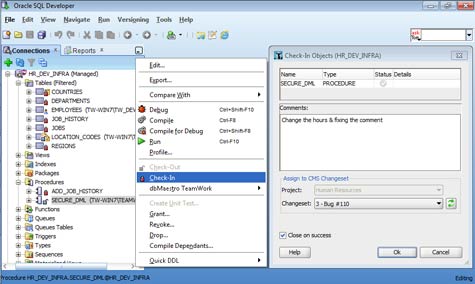
DBmaestro

But database change management is only one piece of the DevOps puzzle. Inside most organizations, DevOps is made up of a collection of processes surrounding everything from application release management to capacity management. This means the products that most IT organizations are going to want to use to manage that process almost by definition need to have open APIs.

That idea might not make every vendor that participates in this category comfortable. But given the fact that most IT organizations have no idea what tomorrow will bring in terms of DevOps requirements, there’s no getting around it.

MV

Michael Vizard is a seasoned IT journalist, with nearly 30 years of experience writing and editing about enterprise IT issues. He is a contributor to publications including Programmableweb, IT Business Edge, CIOinsight and UBM Tech. He formerly was editorial director for Ziff-Davis Enterprise, where he launched the company’s custom content division, and has also served as editor in chief for CRN and InfoWorld. He also has held editorial positions at PC Week, Computerworld and Digital Review.

Recommended for you...

Top ETL Tools 2022
Collins Ayuya
Jul 14, 2022
Snowflake vs. Databricks: Big Data Platform Comparison
Surajdeep Singh
Jul 14, 2022
Identify Where Your Information Is Vulnerable Using Data Flow Diagrams
Jillian Koskie
Jun 22, 2022
IT Business Edge Logo

The go-to resource for IT professionals from all corners of the tech world looking for cutting edge technology solutions that solve their unique business challenges. We aim to help these professionals grow their knowledge base and authority in their field with the top news and trends in the technology space.

Property of TechnologyAdvice. © 2025 TechnologyAdvice. All Rights Reserved

Advertiser Disclosure: Some of the products that appear on this site are from companies from which TechnologyAdvice receives compensation. This compensation may impact how and where products appear on this site including, for example, the order in which they appear. TechnologyAdvice does not include all companies or all types of products available in the marketplace.