

Digital Integration: Overcoming Enterprise Data Challenges

One of the primary reasons IT is so difficult to manage is that multiple copies of various data sets are strewn all across the enterprise. The reason all these copies exist is manifold. But the end result is a fragmented IT environment that, with each new data set created, becomes more expensive to manage and maintain.
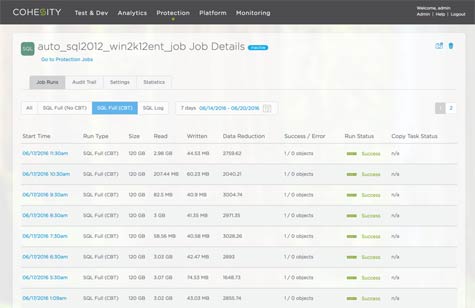
To reduce that complexity, Cohesity created a storage platform designed to unify and consolidate secondary storage systems. This week, Cohesity released updates to its DataProtect and DataPlatform offerings that not only double overall I/O performance, but add support for physical Windows and Linux servers along with existing support for VMware virtual machines.
Cohesity CEO Mohit Aron says the Cohesity platform borrows many of the same hyperconvergence concepts that Aron helped pioneer as a founder of Nutanix and applies them to data. Instead of having fragmented copies of data everywhere, Cohesity makes use of application programming interfaces (APIs) to access data that is indexed in an object-based storage system. That approach then serves to dramatically reduce the amount of data that needs to be stored across the enterprise, says Aron.
Obviously, IT organizations of all sizes are struggling with the amount of data they now need to manage. Cloud service providers alleviated this problem by deploying object-based storage systems. Now many enterprise IT organizations are racing to follow suit.
Of course, not every application is designed to natively access an object-based storage system. But from the perspective of the secondary storage systems that house the vast majority of the data stored in the enterprise, there’s really no reason to hold back. Most of that data is infrequently accessed. As such, the opportunity to reduce the cost of storing that data far outweighs any other issue that might preclude an IT organization from employing an object-based storage system to support primary data.
Save
Save